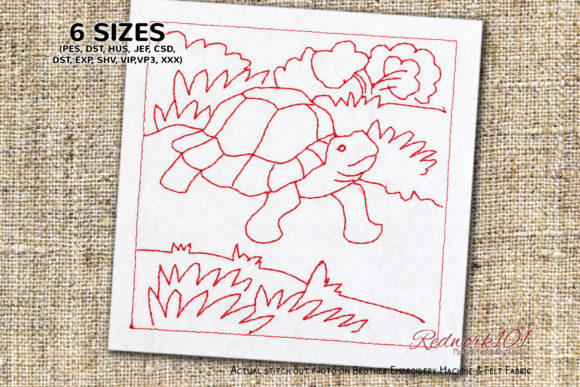
Tortoise Redwork: A Practical Review for Makers
When I first pulled up the Tortoise Redwork design on my screen, I wasn’t looking for complexity. I was looking for clarity. In the world of machine embroidery, especially when dealing with themes like Marine Mammals or nature-inspired motifs, there is a tendency to over-digitize. We often see designs packed with so many fill stitches and satin borders that they lose their charm once stitched out on textured fabric. This design, however, takes a different approach. It relies on the timeless elegance of redwork, a style that prioritizes line work and negative space over dense coverage.
As an experienced designer who has spent countless hours hooping everything from delicate baby onesies to heavy canvas tote bags, I evaluate every new embroidery file with a critical eye. Does it stitch cleanly? Will it hold up after washing? Does it look professional, or does it look like a hobbyist’s mistake? Here is my honest assessment of how Tortoise Redwork performs in real-world scenarios.
First Impressions and Visual Personality
The immediate mood this design creates is one of calm simplicity. The tortoise shape is rendered primarily through running stitches, which gives it a hand-drawn, organic feel. Unlike a heavy applique design that requires cutting and fusing, or a complex fill stitch pattern that can pucker thin fabric, this redwork style sits lightly on the material. The optional box stitch mentioned in the description adds a nice framing element, but I appreciate that it is not mandatory. This flexibility allows me to adapt the design for different projects without feeling constrained by a rigid border.
For those of us selling handmade products, visual appeal is everything. Customers are drawn to designs that look intentional and clean. Tortoise Redwork offers high stitching clarity because the lines are distinct and uncluttered. Whether you are using it for a custom apparel piece or a decorative home item, the design reads well from a distance and holds up under close inspection.
Real-World Application: The Tote Bag Test
To truly understand the value of an embroidery project, you have to imagine it on a finished product. I recently considered using this design for a line of eco-friendly tote bags. Canvas is a forgiving fabric, but it has a noticeable weave. Dense designs can sometimes look muddy on canvas, but the open nature of redwork allows the texture of the fabric to show through, enhancing the rustic, handmade aesthetic.
I envisioned placing the tortoise slightly off-center on a natural cotton tote, using a deep crimson thread to contrast against the beige background. The result would be understated yet striking. For an Etsy seller or small shop owner, this kind of subtlety often converts better than loud, oversized graphics. It suggests quality and thoughtfulness. If you are creating a personalized gift, such as a beach bag for a marine biology student or a nature lover, this design fits the narrative perfectly without being overly literal or cartoonish.
Versatility Across Product Lines
Beyond tote bags, Tortoise Redwork shines in several other categories. Consider sweatshirt embroidery. On fleece or French terry, heavy stitch density can cause stiffness and discomfort. Because this design uses primarily running stitches, it remains soft and flexible, making it ideal for wearable custom apparel. It works equally well for baby embroidery, where gentle textures are paramount. A small version of this tortoise on a muslin swaddle or a cotton bib would be adorable and safe, provided you use a proper stabilizer to prevent puckering.
For holiday embroidery or seasonal gifts, the redwork style is inherently festive if you choose the right thread color. While traditional redwork uses red, don’t be afraid to experiment. A forest green thread could make this a perfect earth-day gift, while a navy blue might align it more closely with its Marine Mammals category roots, even though a tortoise is a reptile. The versatility of the line work allows for creative interpretation.
Technical Considerations and Fabric Choices
While the design is forgiving, it is not without its technical requirements. As a reviewer, I must point out where caution is needed. Redwork relies entirely on the precision of the running stitch. If your machine tension is off, or if you skip the stabilizer, the lines will look jagged and uneven. Always test the design on scrap fabric first. This is non-negotiable for any professional craft business.
Fabric texture plays a huge role here. On smooth cotton or linen, the design will look crisp. On highly textured fabrics like wool or thick towel material, the small details might get lost. If you are planning to use this on a kitchen towel, ensure the weave is tight enough to support the stitch path. For stretchy fabrics, such as jersey knits used in t-shirts, a cut-away stabilizer is essential to maintain the shape of the tortoise over time. Without it, the garment’s movement could distort the outline.
Another factor is hoop size. While the description does not specify exact dimensions, redwork designs often scale well. However, scaling down too much can cause the stitches to merge, losing the definition of the shell patterns. Always check the minimum recommended size in your digital embroidery file documentation before resizing. If you are creating an embroidered patch, ensure the backing is sturdy enough to support the single-layer stitching.
Commercial Viability and Brand Consistency
For commercial embroidery projects, consistency is key. If you are building a brand around nature-themed items, Tortoise Redwork offers a cohesive look. It pairs well with other simple line-art designs, allowing you to create a collection that feels curated rather than chaotic. This consistency builds customer trust. Buyers recognize the quality and style, which encourages repeat purchases.
When preparing printable mockups or digital product previews for your online store, this design photographs beautifully. The high contrast between the thread and fabric makes for clear, engaging images. However, remember that lighting can affect how redwork appears. Shoot in natural light to capture the true depth of the stitches. Avoid harsh flashes that can flatten the dimensional aspect of the thread.
Final Designer Notes
Before you commit to a large production run or list this as a new item in your small shop product lineup, take these practical steps:
- Check Thread Contrast: Ensure your thread color stands out against the fabric. Low contrast can make redwork look unfinished.
- Inspect Small Details: Zoom in on the digitized file to check for unnecessary jump stitches or loose ends that might need trimming.
- Verify Licensing: Confirm whether the license allows for commercial use of the finished product. Most designers allow selling physical items, but restrictions may apply to digital resale.
- Test Washability: Stitch a sample, wash it, and dry it. Check for thread bleeding or fabric distortion.
Tortoise Redwork is a solid addition to any designer’s library. It respects the material it is stitched on and offers a level of sophistication that appeals to modern buyers. It is not just a design; it is a tool for creating meaningful, high-quality handmade products. Whether you are a hobbyist making gifts for friends or an entrepreneur scaling your craft business, this design delivers reliability and charm. Just remember to respect the basics: good stabilizer, correct tension, and thoughtful fabric selection. With those in place, this tortoise will crawl its way into the hearts of your customers.