Crescent Moon Earrings: A Designer’s Review
As an embroidery designer who spends countless hours digitizing and testing files, I have learned that not every digital download translates seamlessly into a high-quality finished product. When I first encountered the Crescent Moon Earrings machine embroidery design on Creative Fabrica, I was immediately drawn to its delicate aesthetic. It promises to be the easiest way to create space-themed jewelry, but my job is to look past the marketing copy and evaluate how it performs under the needle. This review explores whether this free-standing lace (FSL) file is a viable asset for your handmade business or personal crafting projects.
First Impressions and Visual Appeal
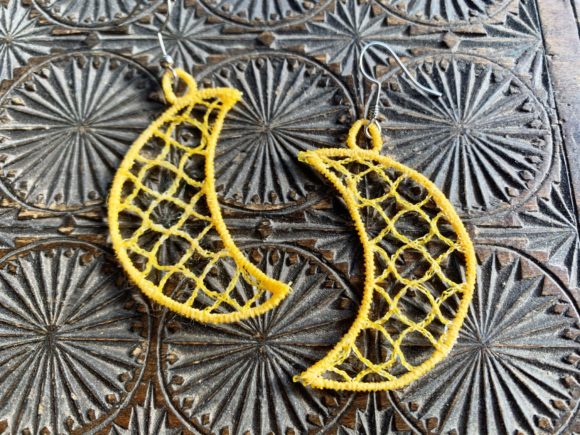
The visual mood of the Crescent Moon Earrings is ethereal and modern. Unlike bulky embroidered patches that can weigh down lightweight fabrics, this design relies on the airy nature of free-standing lace. The stitching personality appears refined, with clean lines that suggest a professional finish. For accessories, particularly jewelry, detail level is paramount. A jagged or poorly digitized edge can ruin the illusion of delicate metalwork or celestial charm.
This design fits naturally into the current trend of minimalist, celestial-inspired decor and fashion. It is not just limited to earrings; as the description notes, it can serve as a pendant or a charm. This versatility makes it a strong candidate for designers looking to expand their product lines beyond traditional apparel. The decorative appeal lies in its simplicity, allowing the texture of the thread and the structure of the lace to take center stage.
Real-World Application for Handmade Businesses
For Etsy sellers and small business owners, versatility is key to maximizing the return on investment for any digital embroidery file. While the primary use case here is jewelry, I see significant potential in broader applications. Imagine pairing these crescent moons with other space-themed elements to create a cohesive collection. They could be attached to tote bag designs as dangling charms, adding movement and interest to a static surface.
In the realm of custom apparel, these FSL elements could be sewn onto sweatshirt embroidery projects as unique focal points, perhaps clustered near the collar or cuff. For nursery decor, they make excellent mobiles or embellishments for baby blankets, provided they are secured safely away from infant reach. The ability to use them as pendants opens up opportunities for handmade gift sets, where a matching necklace and earring set can command a higher price point than single items.
Furthermore, for those selling printable mockups or digital design assets, having a high-quality 3D element like this can enhance product photography. The shadow and depth created by free-standing lace photograph beautifully, adding a tactile sense to online listings that flat graphics often lack.
Technical Considerations and Stitching Performance
Working with free-standing lace requires a different approach than standard satin stitch or fill stitch applications on fabric. Since there is no backing fabric to support the threads, the integrity of the design relies entirely on the stitch density and the quality of the stabilizer. When reviewing the Crescent Moon Earrings, it is crucial to consider the technical demands of FSL.
First, hoop size is critical. Ensure your machine can accommodate the hoop required for this specific file. Small hoop sizes often mean you are working in a confined space, which requires precise placement. Second, thread choice matters immensely. For a celestial look, metallic or variegated thread colors can enhance the moon’s glow, but they may require slower stitching speeds to prevent breakage. Standard polyester threads in white, cream, or pale gold will offer durability and a classic lace appearance.
Stabilizer selection is non-negotiable. You must use a water-soluble stabilizer that is thick enough to hold the stitches during formation but dissolves completely afterward. If the stabilizer is too thin, the lace may distort; if it is too thick, it may leave residue. Always test on scrap fabric or, in this case, scrap stabilizer, to dial in your tension settings before committing to your final material.
Navigating Fabric and Surface Challenges
While this is an FSL design, you may wish to attach the finished pieces to various surfaces. If you are incorporating these into commercial embroidery products like caps or curved surfaces, be mindful of the attachment method. Sewing a rigid lace piece onto a stretchy fabric like a sweatshirt requires care to avoid puckering. Using a zigzag stitch or a narrow satin stitch border can help secure the edges without compromising the delicate look.
For dark fabric applications, consider using a contrasting thread color to make the moon pop, or stick to traditional white lace for a subtle, textured effect. If you are using these as charms on kitchen towels or aprons, remember that these items undergo frequent washing. Ensure that any connecting rings or threads used to attach the lace are durable and colorfast. Inspect small details after stitching to ensure no loose threads remain, which could unravel during laundering.
Enhancing Product Value and Brand Consistency
Incorporating unique elements like the Crescent Moon Earrings can significantly affect product value. Buyers often perceive handmade items with intricate details as higher quality, fostering buyer trust. When your finished product looks polished and professional, it reinforces brand consistency. This design allows for a high level of customization; you can vary the thread colors to match seasonal trends or specific customer requests for a personalized gift.
From a marketing perspective, the visual appeal of FSL jewelry is high. It engages customers who are looking for something different from mass-produced accessories. By offering these as part of a broader collection of embroidery files or finished goods, you can increase customer engagement and encourage repeat purchases. The uniqueness of the design helps your boutique merchandise stand out in a crowded marketplace.
Final Verdict and Practical Advice
Before downloading or purchasing, always confirm file details and licensing on the Creative Fabrica product page. The description mentions it is a free-standing lace FSL design, but it does not specify stitch count, exact file formats, or machine compatibility. As a professional, I advise checking these specifics to ensure they match your equipment. Verify if the license allows for commercial use of finished products, especially if you plan to sell the earrings or items adorned with them.
To get the best results, review stitch density in your embroidery software if possible. Compare light and dark fabric mockups to visualize the final outcome. Start with a test run to check thread color contrast and ensure the lace releases cleanly from the stabilizer. If you are new to FSL, this design seems approachable, but patience and precision are required.
In conclusion, the Crescent Moon Earrings embroidery file offers a charming and versatile option for designers looking to add a touch of celestial elegance to their work. Whether used for jewelry, apparel accents, or home decor, it has the potential to elevate your handmade products. With careful attention to stabilizer choice and thread quality, this design can become a reliable staple in your creative toolkit.